
Doctor of Dental Surgery (DDS)
Dental Crowns in Ontario: Types, Procedure, and How Much They Cost
A dental crown is one of the most common restorative treatments in dentistry. It can preserve a tooth that has been cracked, weakened by decay, or treated with a root canal. It can also improve the appearance of a tooth that is severely discoloured or misshapen. Yet for many patients in Ontario, choosing a crown raises practical questions that are not always easy to answer: What types of crowns exist? How does the procedure actually work? How much will it cost, and will insurance help?
Key Takeaways
- A dental crown is a custom cap that covers a damaged tooth to restore its shape, strength, and appearance.
- Five main materials are used in Ontario: porcelain (ceramic), zirconia, E.max (lithium disilicate), porcelain-fused-to-metal (PFM), and gold alloy.
- The standard procedure requires two visits, though same-day CAD/CAM crowns are available for certain cases.
- According to the ODA Fee Guide, the base cost of a porcelain, ceramic, or polymer glass crown in Ontario starts at approximately $1,099 to $1,517, with a mandatory dental lab fee of $250 to $350 added on top.
- Most dental insurance plans classify crowns as major restorative work and typically cover 50% of the cost. The Canadian Dental Care Plan (CDCP) also covers crowns with mandatory pre-authorization.
- With proper care, a well-fitted dental crown can last 10 to 15 years or longer.
Find our Dental Clinic Near You
What Is a Dental Crown?
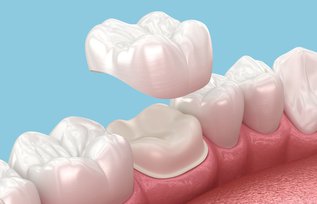
A dental crown, sometimes called a cap, is a hollow, custom-made restoration that fits over the entire visible portion of a tooth above the gum line. Once cemented in place, it restores the tooth's original shape, size, and strength while also improving its appearance. According to the Canadian Dental Association , a crowned tooth looks and functions much like a natural tooth.
The terms "crown" and "cap" refer to the same thing. Some patients arrive at a consultation asking about a "dental cap" and are surprised to learn that their dentist has been discussing the very same treatment under the name "crown." There is no clinical difference between the two terms.
A crown is not a temporary fix. It is a durable, permanent restoration designed to last for many years. Unlike a filling, which replaces a portion of the damaged tooth structure, a crown encases the entire tooth and provides 360-degree protection. This makes it the preferred choice when the remaining tooth structure is too compromised for a filling to hold reliably.
When Do You Need a Dental Crown?
Your dentist may recommend a crown in several situations. Each one involves a tooth that has lost enough structure that a simpler restoration, such as a filling or bonding, would not provide adequate long-term protection.
After Root Canal Treatment
A tooth that has undergone root canal therapy loses its internal blood supply and becomes more brittle over time. Both the Canadian Dental Association and the Ontario Dental Association consider crown placement after root canal treatment on posterior teeth (premolars and molars) to be standard clinical care. Without a crown, these teeth face a significantly higher risk of fracture under normal chewing forces.
Cracked or Fractured Teeth
Unlike a bone, a cracked tooth does not heal on its own. Each chewing cycle further opens the crack, which can eventually lead to a complete fracture and tooth loss. A crown binds the tooth together, stops the fracture from spreading, and eliminates the sharp pain that occurs when cracked edges separate under pressure.
Large Fillings That Compromise Tooth Structure
When a filling occupies more than half of a tooth's width, the remaining walls become thin and vulnerable to fracture. In these cases, replacing the failing filling with a crown provides structural reinforcement that a new filling cannot. If you are weighing whether your situation calls for a crown or a filling , our earlier article covers the key factors to consider.
On Top of a Dental Implant
When a missing tooth is replaced with a dental implant , the implant post serves as an artificial root embedded in the jawbone. A crown is then attached to the implant to serve as the visible, functional tooth. Implant-supported crowns are custom-made to match the surrounding teeth in colour and shape.
Cosmetic Restoration
When a tooth is severely discoloured, misshapen, or structurally compromised beyond what veneers or bonding can correct, a crown delivers both cosmetic improvement and structural protection. However, crowns require more tooth reduction than veneers, so your dentist will discuss the trade-offs before recommending this option. For a detailed comparison, see our guide to veneers vs crowns and their aesthetic and functional benefits .
Types of Dental Crowns: Materials Compared
The material your dentist recommends depends on which tooth needs the crown, the forces that tooth bears, your aesthetic preferences, and your budget. Five main types of dental crown materials are used in Ontario clinics today.
Porcelain (All-Ceramic) Crowns
Porcelain crowns are made entirely from dental ceramic and are popular because they closely mimic the translucency and colour of natural tooth enamel. They reflect light in a way that makes them virtually indistinguishable from the surrounding teeth. This makes them an excellent choice for front teeth and any tooth that is visible when you smile.
Porcelain crowns are a good option for patients who want the most natural appearance and do not have a history of heavy grinding (bruxism). However, pure porcelain can be more brittle than some alternatives and may chip under excessive force, which is why many dentists favour newer ceramic options like zirconia for back teeth.
Zirconia Crowns
Zirconia (zirconium dioxide) has become the most commonly used material for posterior crowns in Canadian dentistry over the past several years. Monolithic zirconia crowns are milled from a single solid block of ceramic and are extremely fracture-resistant. They are sometimes referred to as "ceramic steel" because of their exceptional strength. This makes them the preferred choice for patients who grind their teeth or need a crown on a molar that bears heavy chewing forces.
Modern zirconia formulations have significantly improved in terms of aesthetics. While earlier versions could appear opaque, current multi-layered zirconia crowns offer a much better colour and translucency match to natural teeth. Zirconia crowns generally cost more than traditional porcelain but offer a longer expected lifespan in high-stress locations.
E.max (Lithium Disilicate) Crowns
E.max crowns are made from a high-strength glass ceramic called lithium disilicate. This material offers what many clinicians consider the best balance between aesthetics and durability. E.max mimics the light-reflecting properties of natural enamel better than almost any other material, which is why it is often considered the gold standard for front teeth.
Because E.max crowns can be chemically bonded to the tooth structure, they often require less tooth reduction (less drilling) than traditional crowns. This preserves more of your natural tooth, which is always a clinical advantage. The trade-off is that E.max is not quite as strong as monolithic zirconia, so it may not be the first choice for molars in patients with very heavy bite forces.
Porcelain-Fused-to-Metal (PFM) Crowns
PFM crowns have been used in dentistry for decades. They consist of a metal inner shell covered by a porcelain outer layer, combining the strength of metal with the natural appearance of porcelain. For many years, PFM was the default choice for both front and back teeth.
The main drawback of PFM crowns is that the metal margin can sometimes become visible as a dark line at the gum line, particularly if gum recession occurs over time. Additionally, the porcelain layer can chip away from the metal base. Because of these limitations, all-ceramic and zirconia crowns have largely replaced PFM in modern Canadian practice for patients who prioritize aesthetics. PFM remains a viable and more affordable option when appearance is less of a concern.
Gold and Metal Alloy Crowns
Gold crowns are one of the most clinically successful restorations in the history of dentistry. Gold alloys are biocompatible, extremely durable, and remarkably gentle on the opposing teeth, meaning they cause minimal wear to the teeth you bite against. They also require the least amount of natural tooth removal during preparation.
The obvious limitation is aesthetics: gold is clearly visible and does not match the colour of natural teeth. For this reason, gold crowns are used almost exclusively on back molars where visibility is minimal. They remain an excellent choice for patients who prioritize longevity and function above all else.
"Choosing the right crown material is not a one-size-fits-all decision. We evaluate each patient's bite, the location of the tooth, and their long-term goals before recommending a specific material. A crown on a front tooth demands a different approach than a crown on a molar." — Dr. Amir Guorgui, BSc, DMD, MACSD — Lead Dentist, Skymark Smile Centre
Crown Materials at a Glance
| Material | Best For | Durability | Aesthetics | Relative Cost |
|---|---|---|---|---|
| Porcelain (Ceramic) | Front teeth | Good (10–15 years) | Excellent | Mid-range |
| Zirconia | Back teeth, bruxism | Very high (15+ years) | Very good | Higher |
| E.max (Lithium Disilicate) | Front teeth, minimal prep | High (10–15 years) | Excellent | Higher |
| PFM | Back teeth, budget option | Good (10–15 years) | Good (metal line risk) | More affordable |
| Gold Alloy | Back molars, longevity | Highest (20–30+ years) | Poor (gold colour) | Variable (gold price) |
The Dental Crown Procedure: What to Expect
The standard dental crown procedure is completed in two visits to your dentist. Knowing what happens at each stage can help reduce anxiety and ensure you are fully prepared.
First Visit: Tooth Preparation and Impressions
Your dentist begins by administering local anesthesia to ensure you are comfortable throughout the procedure. The tooth is then carefully reshaped (filed down) on all sides to create room for the crown. The amount of tooth structure removed depends on the type of crown being placed. Metal and gold crowns require less removal, while porcelain and ceramic crowns need slightly more space to achieve a natural appearance.
After the tooth is prepared, your dentist takes an impression. This may be done with a traditional putty-based material or, increasingly, with a digital intraoral scanner. The impression is sent to a dental laboratory where your custom crown is fabricated. Colour matching is also performed at this stage to ensure your crown blends seamlessly with the surrounding teeth.
Wearing a Temporary Crown
While your permanent crown is being made (usually 1 to 2 weeks), your dentist places a temporary crown over the prepared tooth to protect it. Temporary crowns are made from acrylic or composite resin and are not as strong as permanent crowns.
During this period, take the following precautions:
- Avoid sticky or chewy foods (caramel, gum, taffy) that could pull the temporary crown off.
- Avoid biting down on hard foods (ice, nuts, hard candy) on the side with the temporary crown.
- When flossing, slide the floss out from the side rather than pulling it straight up, to avoid dislodging the temporary.
- If the temporary crown comes loose or falls off, contact your dentist promptly. Do not attempt to re-cement it yourself with household adhesive.
Second Visit: Permanent Crown Placement
At your second appointment, your dentist removes the temporary crown and checks the fit, shape, colour, and bite of the new permanent crown. Minor adjustments may be made to ensure a comfortable bite. Once everything is confirmed, the crown is permanently cemented in place. The entire second visit typically takes 30 to 60 minutes.
Same-Day Crowns: How They Work
Some dental offices, including practices equipped with CAD/CAM (computer-aided design and manufacturing) technology such as CEREC, can design and mill a ceramic crown in a single visit. A digital scan of the prepared tooth is taken, and the crown is milled from a ceramic block right in the office while you wait.
Same-day crowns eliminate the need for a temporary crown and a second visit. They are most commonly made from ceramic or zirconia materials. The same-day milling process typically adds $200 to $400 to the cost of the crown. Not all cases are suitable for same-day crowns. Complex cases involving multiple teeth or teeth that require significant colour matching with adjacent restorations may still benefit from a lab-fabricated crown.
How Much Does a Dental Crown Cost in Ontario?
Crown cost is one of the most common questions patients ask. In Ontario, dental fees are not regulated by the government. Instead, the Ontario Dental Association (ODA) publishes an annual Suggested Fee Guide that serves as a reference for dentists, patients, and insurance providers. Dentists are free to charge above or below the ODA guide.
Average Cost by Material Type
According to the ODA Suggested Fee Guide and publicly available dental fee data for Ontario, the typical cost of a dental crown includes the procedure itself plus a mandatory dental laboratory fee. The base cost for a porcelain, ceramic, or polymer glass crown under the ODA Fee Guide ranges from approximately $1,099 to $1,517, with a lab fee of $250 to $350 added. This means the total out-of-pocket cost for a single crown in Ontario generally falls in the $1,349 to $1,867 range, depending on the material and the complexity of the case.
| Crown Type | Approximate Cost Range in Ontario (2026) |
|---|---|
| All-Ceramic / Porcelain | $1,349 – $1,600 |
| Zirconia (Monolithic) | $1,400 – $1,800 |
| E.max (Lithium Disilicate) | $1,400 – $1,800 |
| Porcelain-Fused-to-Metal (PFM) | $1,200 – $1,500 |
| Gold Alloy | $1,300 – $1,700+ (varies with gold price) |
| Same-Day CAD/CAM Crown | $1,500 – $2,000 (includes milling premium) |
Note: These figures are approximate ranges based on the ODA Suggested Fee Guide and publicly available Ontario dental pricing data for 2026. Actual fees vary by clinic. Contact your dental office for a precise quote.
Front Teeth vs. Back Teeth: Does Location Affect Cost?
The location of the tooth can influence the final cost of a dental crown. Front teeth (incisors and canines) often require crowns with superior aesthetics, such as E.max or layered zirconia, which tend to be at the higher end of the price range. The shade-matching process is also more demanding for front teeth because even a slight colour mismatch will be visible when you smile.
Back teeth (premolars and molars) are subjected to greater chewing forces, so they require stronger materials. Monolithic zirconia and gold are common choices for molars. While these materials are extremely durable, their cost is driven more by materials science than by aesthetic complexity. Molars also require more chair time to prepare because they are harder to access, which can add to the overall fee.
What Factors Affect the Final Price?
Beyond the material itself, several factors can increase or decrease the total cost of a dental crown:
- Preliminary treatment: If the tooth needs a root canal, core build-up (rebuilding the internal structure), or gum surgery before a crown can be placed, the total cost of treatment will be higher.
- Lab fees: Crowns fabricated by high-quality Canadian dental laboratories generally cost more than those outsourced to offshore labs. In-house milling (same-day crowns) eliminates the lab turnaround but may carry a milling premium.
- Complexity: Teeth with severe damage, unusual anatomy, or a history of prior restorations may require additional chair time and expertise.
- Geographic location: Dental practices in major urban centres (Toronto, Mississauga, Ottawa) tend to have higher overhead costs, which can influence pricing. Practices in smaller communities may charge less.
Does Dental Insurance Cover Crowns in Ontario?
Most private dental insurance plans in Ontario classify crowns as a major restorative procedure. Typical coverage is 50% of the cost, subject to an annual maximum benefit. Some premium plans may cover up to 80%. Because coverage levels vary significantly between plans, it is strongly recommended that you submit a pre-treatment estimate (predetermination) to your insurance provider before proceeding.
The Canadian Dental Care Plan (CDCP) and Crowns
The Canadian Dental Care Plan (CDCP), the federal government program for eligible Canadians with a net family income under $90,000, does cover dental crowns. However, coverage requires mandatory pre-authorization: your dentist must submit the proposed treatment for review before the crown is placed.
The CDCP copayment structure is based on income tiers:
- Net family income under $70,000: 0% copay (100% of the CDCP fee covered)
- Net family income $70,000 to $79,999: 40% copay (60% covered)
- Net family income $80,000 to $89,999: 60% copay (40% covered)
Even at the highest coverage tier, be aware that the CDCP reimbursement rate may be lower than your dentist's actual fees, which could result in some out-of-pocket costs. Skymark Smile Centre is a registered CDCP provider serving patients in Mississauga and the surrounding area. You can learn more about our CDCP dentist in Mississauga on our page.
Financing Options
If your insurance does not fully cover the cost of a crown, or if you do not have insurance, many dental practices offer payment plans or financing options that spread the cost over several months. Ask your dental office about available options before your appointment.
How Long Do Dental Crowns Last?
According to the Canadian Dental Association, dental crowns are strong and generally last for about 10 years or longer if you take good care of them. However, the actual lifespan depends heavily on the material, the crown's location, and how well you maintain your oral hygiene.
- Gold and metal alloy crowns have the longest documented lifespans, with many lasting 20 to 30 years or more.
- Zirconia crowns are expected to last 15 years or longer due to their exceptional fracture resistance.
- Porcelain, E.max, and PFM crowns typically last 10 to 15 years with proper care.
Signs that a crown may need replacement include persistent pain or sensitivity, visible cracking or chipping, a dark line at the gum line (PFM crowns), a loose crown, or recurring decay at the crown margin. If you notice any of these, schedule an appointment with your dentist for evaluation.
"The longevity of a dental crown depends on more than just the material. Patients who maintain regular dental check-ups, good daily oral hygiene, and who protect their teeth from grinding with a night guard when needed consistently get the best long-term results from their crowns." — Dr. Goli Ariafar, DDS — General Dentist, Skymark Smile Centre
Caring for Your Dental Crown
A crowned tooth requires the same daily care as a natural tooth. While the crown itself cannot develop cavities, the natural tooth underneath it can. Decay at the margin where the crown meets the tooth is the most common reason crowns eventually fail.
- Brush twice daily with a soft-bristled toothbrush, paying special attention to the gum line around the crown.
- Floss daily, carefully threading the floss around the base of the crown to remove plaque and food debris.
- Avoid habits that can damage crowns: chewing ice, biting fingernails, opening packaging with your teeth, or using your teeth as tools.
- If you grind your teeth (bruxism), ask your dentist about a custom night guard. Bruxism is one of the leading causes of premature crown failure, especially for porcelain and E.max crowns.
- Schedule regular dental check-ups so your dentist can monitor the crown, check for early signs of wear or decay, and address any issues before they require a full replacement.
Dental Crowns at Skymark Smile Centre in Mississauga
Skymark Smile Centre has been serving patients in Mississauga and the western Greater Toronto Area for over 25 years. Our team of experienced dentists, including specialists in sedation dentistry, implants, and cosmetic procedures, provides a full range of crown services using modern materials and digital workflow.
We work with each patient individually to select the right crown material and approach based on the specific tooth, bite, and long-term goals. Our practice is a registered provider under the Canadian Dental Care Plan (CDCP) and accepts most major insurance providers through direct billing.
If you have a damaged tooth, a failing restoration, or if your dentist has recommended a crown, we encourage you to book a consultation . A thorough examination and X-rays will allow us to provide you with a precise treatment plan and cost estimate before any work begins.
Choosing the Right Dental Crown: Your Informed Decision Starts Here
A dental crown is a long-term investment in the health and function of your tooth. Whether you need to protect a tooth after a root canal, replace a failing filling, or restore a cracked molar, the right crown material and a precise procedure can provide decades of reliable service.
The key is to work with a dentist who takes the time to explain your options, shows you what the ODA Fee Guide suggests for your specific case, and helps you navigate insurance or CDCP coverage. No two patients are alike, and no two crowns should be treated as interchangeable.
If you are in Mississauga or the surrounding area and need a dental crown, Skymark Smile Centre is here to help. Contact us to schedule a consultation and take the first step toward restoring your tooth with confidence.
Frequently Asked Questions
What is the cheapest type of dental crown?
Porcelain-fused-to-metal (PFM) crowns are generally the most affordable permanent option in Ontario, typically starting around $1,200 including lab fees. Composite resin crowns are less expensive but are used primarily as temporary restorations and are not recommended as a long-term solution.
Can a dental crown be placed in one visit?
Yes, if your dental office is equipped with CAD/CAM milling technology (such as CEREC), a ceramic or zirconia crown can be designed and placed in a single appointment. This is known as a same-day crown. Not all cases qualify, and the process typically adds a milling premium of $200 to $400 to the cost.
Does getting a dental crown hurt?
No. The tooth is numbed with local anesthesia before the preparation begins, so you should not feel pain during the procedure. Some patients experience mild sensitivity for a few days after each visit, which usually resolves on its own. If you experience dental anxiety, ask your dentist about sedation options.
How much is a dental crown without insurance in Ontario?
Without insurance, the total cost of a single dental crown in Ontario typically ranges from $1,349 to $1,867 or more, depending on the material and the complexity of the case. This figure includes both the dentist's procedure fee and the dental lab fee, as outlined in the ODA Suggested Fee Guide.
What is the difference between a crown and a cap?
There is no difference. "Crown" and "cap" are two names for the same restoration. The clinical term used by dentists is "crown."
Can a dental crown fall off?
Although uncommon, a crown can become loose or fall off if the cement weakens, if decay develops beneath it, or if the crown is damaged by trauma or by biting on a hard object. If your crown comes loose, contact your dentist as soon as possible. Do not try to re-attach it yourself. Your dentist can evaluate the situation and recement or replace the crown as needed.
Do you always need a crown after a root canal?
Not always, but in most cases for posterior teeth (premolars and molars), a crown is strongly recommended. These teeth bear heavy chewing forces, and a root-canal-treated tooth is more brittle than a vital tooth. For front teeth with minimal structural loss, a crown may not always be necessary. Your dentist will evaluate your specific case.